


Industry 4.0
Introduction:
Industry 4.0 began with the recognition of digital technologies’ potential to revolutionize industrial operations. Advancements in computing power, connectivity, and data storage present the vision of interconnected smart factories and autonomous systems.
The various Industry 4.0 applications bring innovation and enhance efficiency like the Internet gives us the interconnection of devices and sensors, facilitating real-time data exchange and monitoring. Artificial intelligence helps in making informed decisions and performing tasks with human-like intelligence. Through Big data analytics, we can analyze data to derive actionable insights and optimize processes. Robotics and automation help streamline operations and reduce manual labor. Looking ahead, the future of Industry 4.0 holds immense promise and potential. Emerging technologies such as 5G, edge computing, and quantum computing will further accelerate the pace of innovation and connectivity. The impact of Industry 4.0 extends beyond economic growth, shaping societies, and industries in profound ways.
Industrial 4.0 Revolution:
Industry 1.0:
This period saw the transition from manual labor to factory-based production systems. Machines increased productivity, lowered costs, and led to urbanization as people moved to cities in search of factory jobs.
Industry 2.0:
The Second Industrial Revolution was a period characterized by the growth of large-scale manufacturing industries, such as steel, chemicals, and electrical equipment. This period also led to industrialization and urbanization, which fostered the expansion of transportation networks, including railways and steamships, making trade and communication possible on a global scale. The growth of telecommunication networks also improved connectivity and enabled the rapid exchange of information.
Industry 3.0:
The Third Industrial Revolution revolutionized industries such as telecommunications, finance, and entertainment, enabling the digitization of processes and the emergence of new business models. With the third industrial revolution, we can see a growing emphasis on information technology, research, and innovation.
Industry 4.0:
The Fourth Industrial Revolution is significantly impacting industries and societies worldwide by emphasizing connectivity, automation, and data-driven decision-making. It is revolutionizing manufacturing processes through smart factories and digital supply chains, improving healthcare through personalized medicine and wearable devices, and transforming transportation through autonomous vehicles and smart infrastructure.
Key Technologies Driving Industry 4.0:

Internet of Things (IoT):
IoT connects physical objects and devices to the internet for data collection and exchange. In industry, IoT sensors enable real-time equipment monitoring, predictive maintenance, and production process optimization.
Artificial Intelligence (AI) and Machine Learning:
AI and machine learning enable machines to analyze data, learn from patterns, and make decisions. In manufacturing, AI is used for predictive analytics, quality control, demand forecasting, and optimizing supply chains.
Big Data Analytics:
Big data analytics processes and analyses structured and unstructured data to extract valuable insights. It is widely used in Industry 4.0 for predictive maintenance, quality control, process optimization, and operational efficiency improvement.
Cloud Computing:
Cloud computing provides on-demand access to scalable computing resources and storage via the Internet. In Industry 4.0, cloud platforms enable remote monitoring, management, and storage of large IoT data sets.
Cyber-Physical Systems (CPS):
CPS integrates the physical and digital worlds. It automates production systems, monitors physical processes, and facilitates real-time decision-making in Industry 4.0.
Augmented Reality (AR) and Virtual Reality (VR):
AR and VR enhance human-machine interaction in industrial settings. They are used for training, remote assistance, assembly guidance, and simulating complex manufacturing processes.
Additive Manufacturing (3D Printing):
3D printing in Industry 4.0 enables rapid prototyping and on-demand manufacturing of complex parts using digital design data.
Blockchain Technology:
Blockchain enables secure decentralized ledgers for verifying transactions. In manufacturing, it can ensure supply chain traceability, product authentication, and data integrity.
Cyber Security:
Ensures protection against cyber threats in hyperconnected manufacturing systems through robust protocols and technologies, safeguarding sensitive data and critical infrastructure.
System Integration:
Facilitates unified data management by connecting disparate manufacturing systems and processes, enabling comprehensive insights for informed decision-making and optimization.
Edge Computing:
Edge computing processes data closer to the source, reducing latency and enabling real-time data analysis. This is crucial in Industry 4.0, as it supports IoT devices, AI algorithms, and other low-latency, high-throughput applications.
5G Connectivity:
5G technology enables fast and seamless communication between devices and systems. It supports real-time monitoring, control, and coordination of industrial processes in Industry 4.0. Additionally, it facilitates emerging technologies like augmented reality and autonomous vehicles.
Benefits of Industry 4.0:
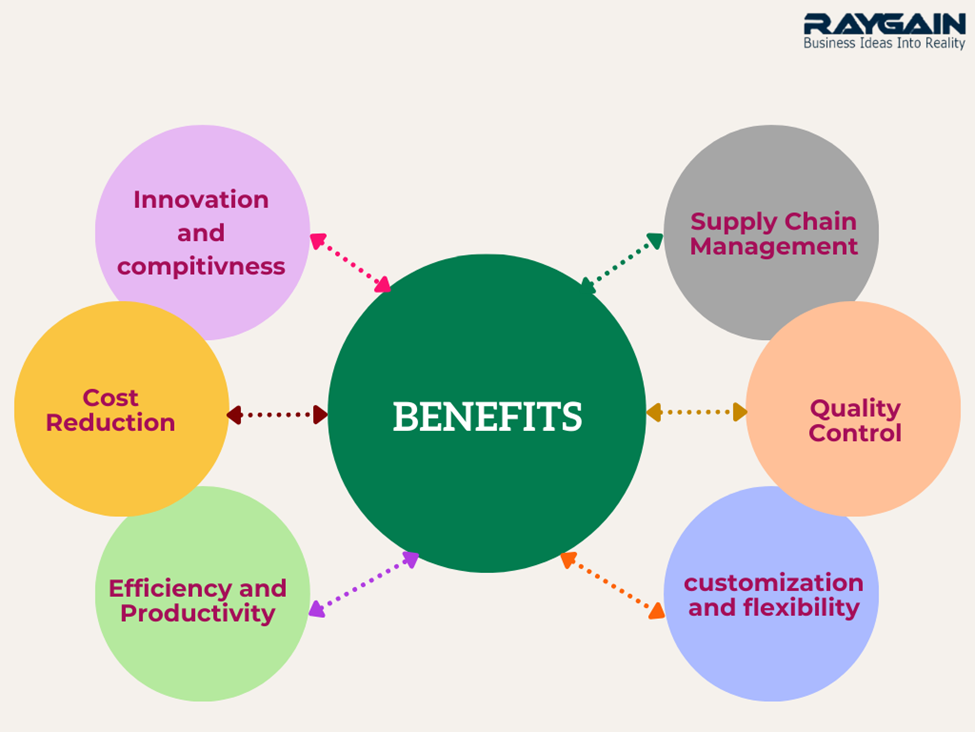
Increased Efficiency and Productivity:
Automating and digitizing processes can increase efficiency by reducing human error and task completion time. Predictive maintenance, made possible through the use of IoT sensors and analytics, enables the identification and resolution of equipment issues before they cause downtime, thus optimizing productivity. Real-time monitoring of production processes facilitates rapid adjustments and resource optimization, leading to increased output.
Cost Reduction:
Automation can result in decreased reliance on manual labor and ultimately lead to lower labor costs in the long run. With the help of predictive maintenance, unplanned downtime can be reduced, which in turn minimizes maintenance expenses and the risk of expensive equipment failures. When resources and processes are optimized, waste, energy consumption, and raw material usage can be reduced, ultimately contributing to cost savings.
Improved Quality Control:
Real-time monitoring and analysis of production data enables early detection of defects or deviations from quality standards. Smart sensors and connected devices provide detailed insights into the production process, facilitating continuous improvement and optimization of product quality. Automated quality control systems ensure consistency and reliability in the manufacturing process, reducing the likelihood of defects and the need for rework.
Customization and Flexibility:
Industry 4.0 technologies have made it possible to create flexible manufacturing systems that can easily adjust to changes in product specifications or customer demands. This has made mass customization more feasible as production processes have become more agile and responsive to individual customer requirements. Additionally, digital twin technology allows for virtual simulations of products and processes, making it easier to create rapid prototypes and customization without the need for physical prototypes.
Enhanced Supply Chain Management:
The integration of IoT devices and sensors throughout the supply chain enables real-time tracking and monitoring of inventory, logistics, and transportation. Utilizing data analytics and AI-driven insights helps improve demand forecasting accuracy, inventory management, and supplier relationship management. Blockchain technology enhances transparency, security, and traceability within the supply chain, thus reducing the risk of counterfeit products and improving overall efficiency.
Innovation and Competitiveness:
Industry 4.0 creates an environment that encourages innovation and experimentation, allowing businesses to create new products, services, and business models. Companies that embrace digital transformation can gain a competitive advantage in the market by delivering innovative solutions more efficiently and quickly than their competitors.
Innovation ecosystems are driven by collaboration and partnerships that span across industries and value chains. These partnerships facilitate the exchange of ideas and best practices, further promoting innovation.
Statistics on the Adoption of Industry 4.0:
Different sectors and countries have adopted Industry 4.0 technologies at varying levels. According to a report by McKinsey, industries like automotive and electronics are leading the way in implementing these technologies, with high levels of automation and connectivity. However, other sectors such as food and beverage and pharmaceuticals are also making considerable progress in embracing these advanced manufacturing techniques.
To maintain its competitive edge in the global market, other countries like the United States, China, and Japan are also investing heavily in Industry 4.0 initiatives.
Case Studies of Successful Industry 4.0 Implementations:
Several companies have already embraced Industry 4.0 and reaped the benefits of increased productivity, efficiency, and innovation. One notable example is Siemens, a global leader in automation and digitalization. Siemens has transformed its manufacturing processes by implementing AI-powered robots, IoT-enabled sensors, and advanced analytics. This has resulted in shorter production cycles, reduced downtime, and improved product quality.
Another success story is BMW, which has embraced Industry 4.0 technologies to create a flexible production system. With the help of IoT and AI, BMW has implemented a smart factory that can produce multiple car models on the same assembly line, allowing for greater customization and responsiveness to customer demands.
Tata Steel one of India’s leading steel manufacturers, integrates industry 4.0 technologies into its operations as it successfully anticipates equipment failure, deploys smart manufacturing systems to optimize the production process. They also implemented a digital supply chain management system to enhance visibility and efficiency across its supply chain.
Challenges and Considerations in Implementing Industry 4.0:
Industry 4.0 provides many advantages, but there are also challenges manufacturers must consider when implementing its technologies. One primary concern is integrating outdated systems with new digital technologies. Many factories still depend on obsolete machinery and infrastructure, which can make the transition to Industry 4.0 more complicated and expensive.
The lack of skilled workers who can operate and maintain the advanced technologies associated with Industry 4.0 is a major obstacle to its implementation. To ensure success, it is crucial to upskill the existing workforce and attract new talent with expertise in AI, IoT, and data analytics.
As factories become more connected and reliant on digital systems, cybersecurity becomes a critical aspect to consider. Manufacturers must address challenges related to protecting sensitive data and intellectual property while ensuring the integrity of production processes.
Steps to Prepare Your Business for Industry 4.0:

Industry 4.0 imposes digital transformation and provides opportunities to transform business operations, optimize processes, and reduce operational costs. This revolution opens the door for innovative business models, personalized customer experiences, and more.
Here are five steps on how one can prepare their business for Industry 4.0:
Assess Current Capabilities: Evaluate your current technological infrastructure, workforce skills, and operational processes to identify strengths, weaknesses, and areas for improvement in readiness for Industry 4.0 adoption.
Invest in Technology: Invest in Industry 4.0 technologies such as IoT, AI, robotics, and data analytics that align with your business goals and operational needs. Start with pilot projects to test and gradually scale solutions.
Upskill Workforce: Provide training and development programs to upskill employees and equip them with the knowledge and expertise needed to operate and leverage new technologies effectively. Foster a culture of continuous learning and innovation.
Establish Data Governance: Implement robust data governance policies and frameworks to ensure the quality, security, and compliance of data collected and utilized across your organization. Establish clear protocols for data collection, storage, analysis, and sharing.
Collaborate with Partners: Foster collaboration with technology vendors, industry partners, and research institutions to stay abreast of emerging trends, share best practices, and co-innovate on Industry 4.0 initiatives that drive mutual value and competitive advantage.
Develop a Digitalization Roadmap: Create a comprehensive roadmap outlining the strategic vision, goals, and milestones for digital transformation within your organization. Prioritize initiatives based on impact and feasibility, and regularly review and adjust the roadmap to align with evolving business needs and technological advancements.
Conclusion:
Industry 4.0 is an emerging era of manufacturing automation that is shaping the future of the industry. By integrating Artificial Intelligence, the Internet of Things, and Big Data analytics, factories are becoming smarter, more connected, and increasingly autonomous. The benefits of Industry 4.0 include improved productivity, cost savings, better quality control, and the ability to customize products on a large scale.
However, implementing Industry 4.0 technologies comes with its own set of challenges. Some of these challenges include the integration of legacy systems, a shortage of skilled labor, and cybersecurity risks.
Therefore, if you want to stay ahead in the ever-evolving world of manufacturing, it’s time to step into the world of smart manufacturing and embrace Industry 4.0. The factories of tomorrow are waiting where innovation and efficiency are the driving forces behind the production of goods.
References:
https://www.weforum.org/agenda/2016/01/the-fourth-industrial-revolution-what-it-means-and-how-to-respond
https://azure.microsoft.com/en-us/resources/videos/tata-steel-india-case-study
https://www2.deloitte.com/insights/us/en/focus/industry-4-0.html
OUR RECENT POSTS
- The Rise of AI Chatbot Development Company
- The Future Trends of Data Science and Artificial Intelligence: Shaping Tomorrow’s World
- Staff Augmentation : How It Can Transform Your Business
- How IT Consulting Services Drive Businesses to New Heights
- The Importance of Data Analysis in Today’s Digital World
