


AI in Healthcare: Uses, Examples, and Benefits
Artificial Intelligence (AI) is transforming the healthcare landscape, offering solutions that enhance patient outcomes, streamline operations, and drive medical advancements. This blog explores the diverse applications of AI in healthcare, supported by recent statistics and examples that highlight its growing significance.
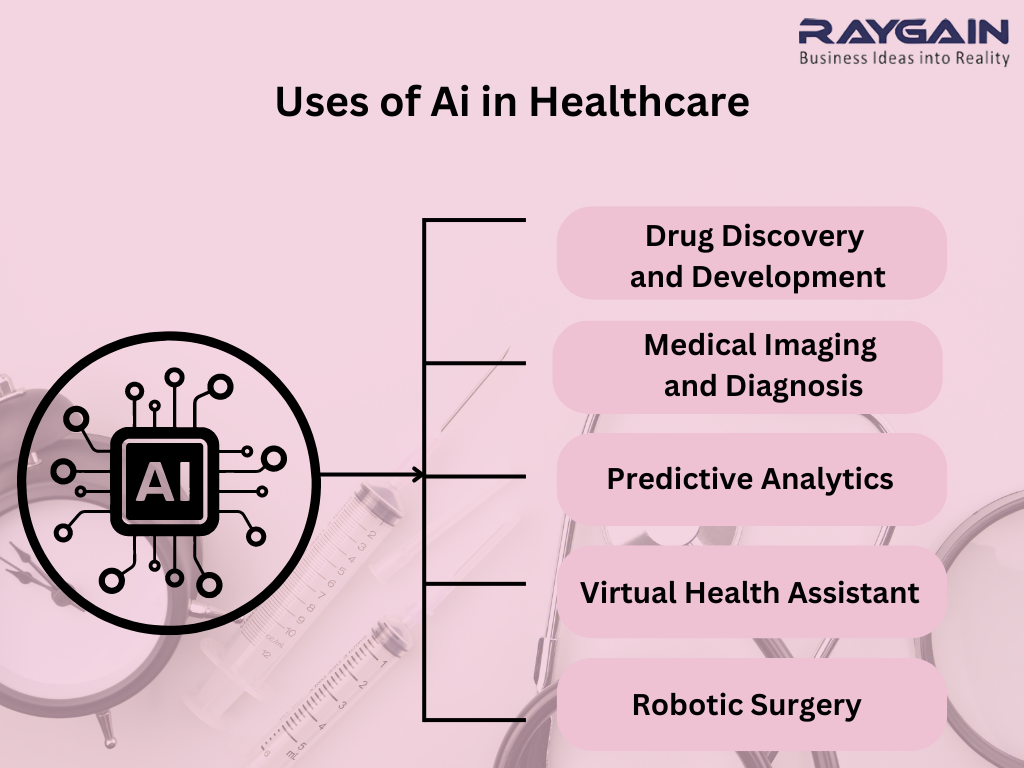
Uses of AI in Healthcare
Medical Imaging and Diagnostics
AI technologies excel at analyzing medical images, aiding radiologists in detecting abnormalities with high precision. Advanced algorithms can identify patterns in X-rays, MRIs, and CT scans that may be missed by human eyes.
Data: A study published in Nature Medicine in 2019 showed that AI algorithms achieved an accuracy rate of 94.6% in detecting breast cancer from mammograms, compared to 88.0% for human radiologists.
Predictive Analytics
AI-driven predictive analytics leverages historical patient data to forecast future health outcomes. This approach is instrumental in predicting disease progression and tailoring preventative measures.
Data: Research from the Journal of Medical Internet Research found that predictive models using AI can reduce ICU readmission rates by 30% and hospital readmission rates by 20%, highlighting their potential to improve patient management.
Drug Discovery and Development
AI accelerates drug discovery by analyzing biological data and predicting drug interactions. This technology significantly shortens the drug development timeline and reduces costs.
Data: A report by Deloitte estimates that AI can reduce drug development costs by up to 60%, and the time required to bring a new drug to market can be cut by up to 50%.
Robotic Surgery
AI-powered robotic surgical systems enhance the precision and efficiency of surgical procedures. These systems provide surgeons with advanced tools and real-time data to improve surgical outcomes.
Data: According to a study in Surgical Endoscopy, robotic-assisted surgeries have been shown to reduce hospital stay lengths by 2.4 days and surgical complications by 15%, compared to traditional surgery methods.
Virtual Health Assistants
AI-driven virtual health assistants offer patients real-time support, including medication reminders, symptom tracking, and health advice. These tools improve patient engagement and adherence to treatment plans.
Data: A survey by Accenture revealed that 65% of patients using AI-powered virtual assistants reported improved management of their health conditions, demonstrating the effectiveness of these tools in patient care.
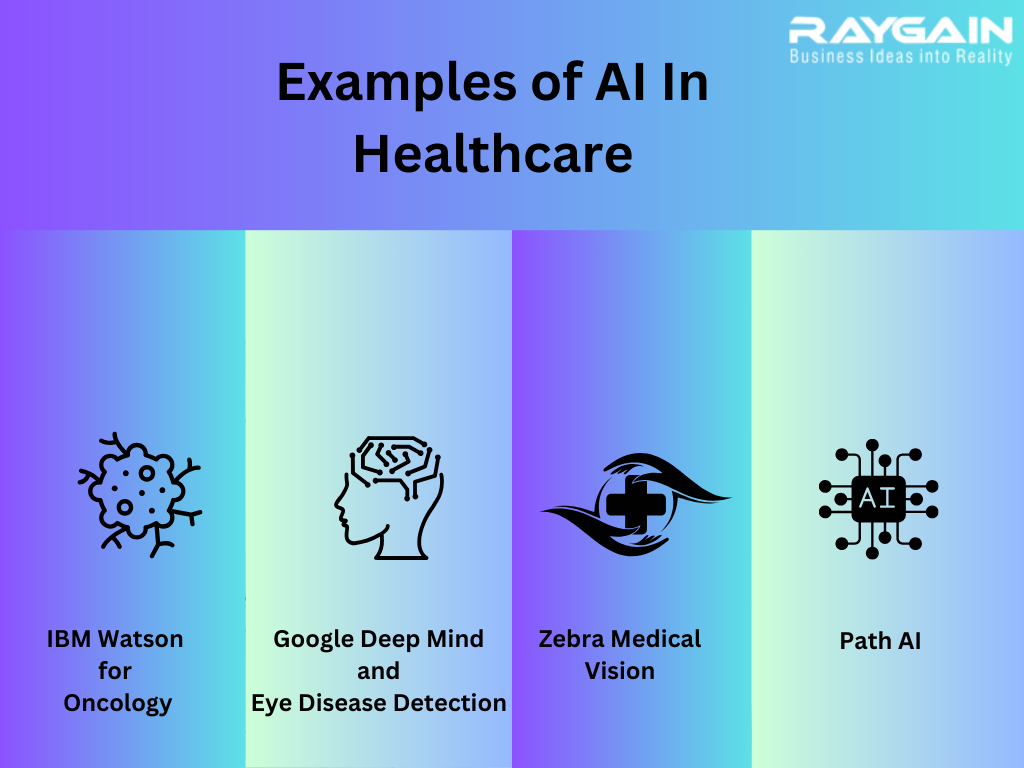
Examples of AI in Healthcare
IBM Watson for Oncology
IBM Watson uses AI to analyze medical literature and patient data to assist oncologists in identifying the most effective cancer treatments.
Data: A study published in JAMA Oncology found that Watson for Oncology provided recommendations that matched expert oncologists’ treatment decisions in 93% of cases
Google DeepMind and Eye Disease Detection
Google DeepMind’s AI algorithms analyze retinal scans to detect over 50 types of eye diseases with high accuracy.
Data: DeepMind’s AI achieved a sensitivity of 94.5% and a specificity of 93.0% in detecting diabetic retinopathy, outperforming human experts in detecting this condition.
PathAI
PathAI’s AI algorithms assist pathologists in diagnosing diseases from tissue samples, improving diagnostic accuracy.
Data: According to PathAI, its AI technology reduced diagnostic errors by 20% compared to traditional methods, leading to more accurate and timely diagnoses.
Zebra Medical Vision
Zebra Medical Vision’s AI platform analyzes medical imaging data to detect various conditions, including cardiovascular diseases and cancer.
Data: Zebra Medical Vision’s AI algorithms achieved an accuracy of 91.8% in detecting cardiovascular diseases from chest X-rays, providing radiologists with critical insights.
Benefits of AI in Healthcare
Improved Diagnostic Accuracy
AI’s ability to process and analyze complex medical data results in more accurate diagnoses and earlier detection of diseases, leading to better patient outcomes.
Data: A report by Stanford Medicine indicates that AI systems have the potential to reduce diagnostic errors by 50%, significantly improving the accuracy of medical diagnoses.
Cost Reduction
AI reduces healthcare costs by enhancing operational efficiencies, minimizing diagnostic errors, and supporting preventive care.
Data: According to a study by McKinsey & Company, AI could save the global healthcare industry up to $100 billion annually by improving operational efficiency and reducing administrative costs.
Enhanced Patient Care
AI enables personalized medicine by analyzing individual patient data to develop customized treatment plans, improving the effectiveness of care.
Data: A study published in Nature found that personalized treatment plans developed using AI resulted in a 25% increase in treatment success rates compared to standard approaches.
Operational Efficiency
AI automates administrative tasks, streamlines workflows, and optimizes resource allocation within healthcare facilities, improving overall efficiency.
Data: Research by Deloitte found that AI can improve operational efficiency in healthcare by up to 30%, allowing healthcare professionals to focus more on patient care.
Accelerated Research and Development
AI accelerates medical research by analyzing large datasets to identify trends and correlations, leading to faster discoveries and innovations.
Data: A study in Pharmaceutical Research revealed that AI-driven research can reduce the time required to identify potential drug candidates by up to 40%.
Conclusion
AI is rapidly transforming healthcare by enhancing diagnostic accuracy, reducing costs, improving patient care, and accelerating research. With its growing role in medical imaging, predictive analytics, drug discovery, robotic surgery, and virtual health assistance, AI is set to redefine how healthcare is delivered. As technology continues to advance, the integration of AI in healthcare will drive significant improvements in patient outcomes and operational efficiency.
For more updates on the latest advancements in healthcare technology, follow us on LinkedIn and stay informed about the future of AI in healthcare.
- The Rise of AI Chatbot Development Company
- The Future Trends of Data Science and Artificial Intelligence: Shaping Tomorrow’s World
- Staff Augmentation : How It Can Transform Your Business
- How IT Consulting Services Drive Businesses to New Heights
- The Importance of Data Analysis in Today’s Digital World
